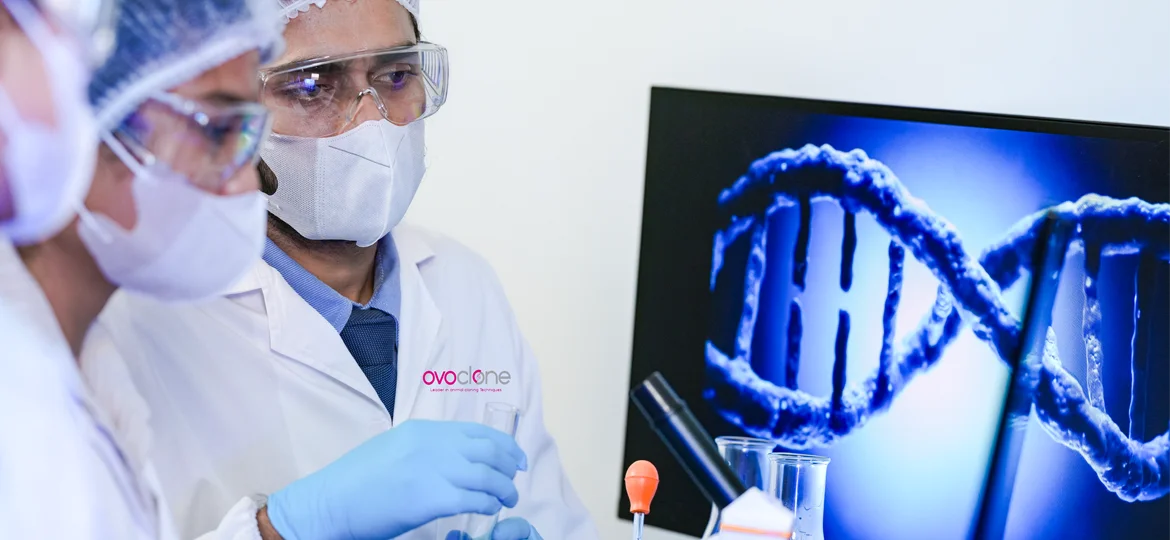
If you look at the laces of a new shoe, you will see that at their tips there is a kind of protective cap. That small piece of plastic prevents the laces from fraying easily and allows them to perform their function comfortably and effectively. However, with daily use and the passage of time, that protective plastic deteriorates, and the laces begin to unravel to the point that they lose their capability and functionality. The same happens with telomeres and chromosomes. Telomeres would, in this case, be that piece of protective plastic, while chromosomes would be the shoelaces. Therefore, when telomeres stop performing their function, chromosomes become unprotected, leading to cellular aging and losing all their skills and abilities. In animal cloning processes, paying attention to the correct behavior of these elements is crucial for successful genetic replication.
What are telomeres? Why are they important?
Telomeres are nucleoprotein structures located at the ends of chromosomes and function as a biological clock. With each cell division, telomeres shorten in length, progressively losing their protective capacity and, therefore, causing cellular aging. After numerous divisions and due to telomere wear, this cell loses its ability to divide, repair, or function properly. Consequently, it results in cell death, affecting tissue regeneration and contributing to the aging of the entire organism. Besides the passage of time, other causes of cellular aging include senescence, accumulation of DNA damage, mitochondrial dysfunction, and oxidative stress.
Why are telomeres important in cloning?
From this explanation, we can conclude the paramount importance of telomeres in cloning processes. When performing cloning, the genetic material from a somatic cell (a body cell that does not participate in reproduction) is used and fused with a previously enucleated (without nucleus) egg. However, somatic cells have already undergone multiple division cycles, so their telomeres are usually shorter compared to germ cells (eggs and sperm). Initially, this led to the belief that clones could inherit short telomeres from birth, meaning accelerated cellular aging and a reduced life expectancy.
What we know today about telomeres in clones
Studies carried out after Dolly did not confirm that fear in general. In other cloned animals, telomeres were seen to recover their length during cellular reprogramming, the process by which the egg “resets” the nucleus of the adult cell.
In addition, somatic cell nuclear transfer techniques have improved greatly since the 1990s. In 2016, a team at the University of Nottingham studied several cloned sheep, four of them from the same cell line as Dolly, and found no signs of premature ageing: aged between 7 and 9, their health was normal for their age.
That is why it is now considered that a healthy clone can have a life expectancy similar to that of a naturally born animal. Even so, as with any birth, each animal’s health depends on many factors and cannot be guaranteed.
At Ovoclone we work with protocols validated by our laboratory and our team of experts. And the first step is always the same: preserving your animal’s cells in time, to keep the option of cloning it in the future open.
Source: University of Nottingham (2016).